
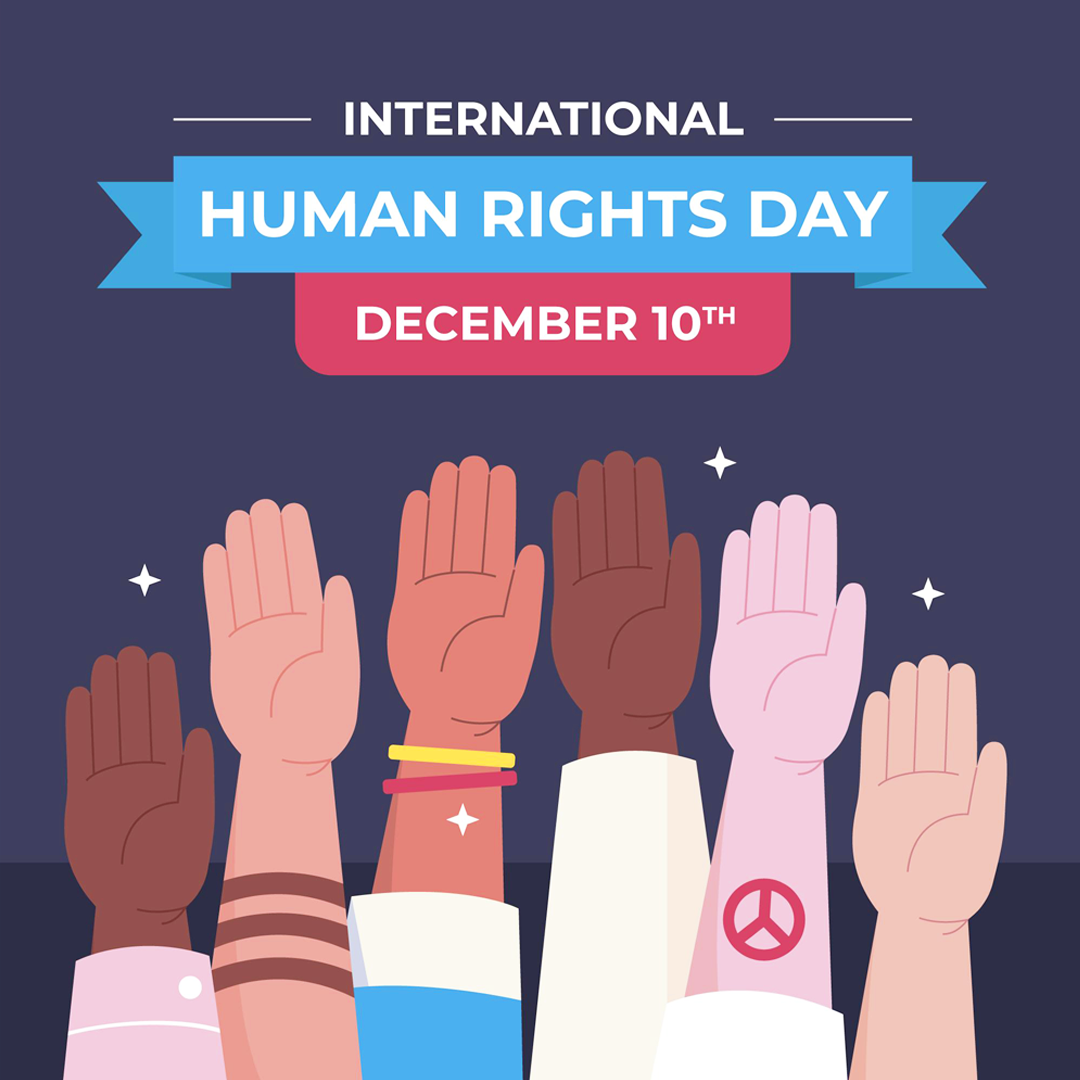


Every year on December 10, the world recognizes Human Rights Day, commemorating the adoption of the Universal Declaration of Human Rights (UDHR) in 1948. Drafted in the aftermath of World War II, the UDHR is one of the most influential documents in modern history, establishing the idea that every human being — regardless of origin, identity, faith, or circumstance — deserves dignity, freedom, and protection.
But darling, Human Rights Day is not just a historical anniversary. It is a living, breathing reminder that the struggle for equality continues, especially for the LGBTQIA+ community. Through a proudly queer-minded lens, let’s walk through exactly why this day matters, how it intersects with LGBTQIA+ rights, and what it represents for global justice.
This day isn’t a simple celebration. It’s a call to action, a moment of reflection, and an opportunity to acknowledge the work we must still do to protect the basic rights of LGBTQIA+ people worldwide.
1. What Human Rights Day Commemorates
Human Rights Day marks the signing of the UDHR, a document that declared — boldly and unapologetically — that human rights are:
- universal,
- inherent,
- indivisible,
- and non-negotiable.
These rights include:
- the right to life,
- the right to free expression,
- the right to privacy,
- the right to safety,
- and the right to equality before the law.
For LGBTQIA+ individuals, these rights are not abstract. They are the difference between safety and danger, between freedom and persecution, between being recognized as fully human or being pushed into invisibility.
Human Rights Day provides a global platform to amplify the voices of marginalized communities, including queer and trans people whose rights remain under threat in many parts of the world.
2. Why Human Rights Day Is Essential for LGBTQIA+ Communities
In 2025, the global landscape for LGBTQIA+ rights remains fractured. Some countries have made enormous strides toward equality, while others have intensified criminalization, censorship, and state-sponsored persecution.
Human Rights Day matters for LGBTQIA+ people because:
- In over 60 countries, consensual same-sex relationships remain criminalized.
- Many nations restrict gender-affirming care or legal recognition for trans people.
- Hate crimes and anti-LGBTQIA+ violence continue to rise in multiple regions.
- Queer people are disproportionately targeted by censorship laws, policing, and anti-democratic policies.
- Intersex people still face medically unnecessary surgeries without consent.
- Bisexual, pansexual, and asexual individuals face erasure and discrimination even in LGBTQIA+ spaces.
- Nonbinary and gender-diverse people remain unrecognized by many legal systems.
Human Rights Day reinforces that LGBTQIA+ rights are not special rights. They are not “extra.” They are simply human rights — the same rights the UDHR established more than seven decades ago.
3. The Universal Declaration of Human Rights Through a Queer Lens
Although the UDHR never explicitly references LGBTQIA+ people — language has evolved since 1948 — its principles apply powerfully to queer life today.
For example:
Article 1: All human beings are born free and equal in dignity and rights.
LGBTQIA+ identities do not diminish that dignity.
Article 3: Everyone has the right to life, liberty, and security of person.
Anti-LGBTQ violence directly violates this principle.
Article 12: No one shall be subjected to arbitrary interference with privacy, family, or home.
This includes protection from criminalization of private consensual relationships.
Article 18: Everyone has the right to freedom of thought, conscience, and religion.
LGBTQIA+ people should not be forced into harmful practices like conversion efforts.
Article 19: Everyone has the right to freedom of opinion and expression.
This protects queer artists, activists, drag performers, and creators whose expression is part of their identity.
Article 25: Everyone has the right to a standard of living adequate for health and well-being.
This includes access to gender-affirming care, HIV treatment, and mental-health support.
Human Rights Day gives activists and communities a chance to apply these universal principles to modern LGBTQIA+ struggles.
4. LGBTQIA+ Rights Are Human Rights
For decades, queer activists pushed for the recognition that LGBTQIA+ rights belong under the umbrella of human rights, not as isolated causes but as integral to global justice.
A few hard-won victories reflect that shift:
- The United Nations has repeatedly affirmed that sexual orientation and gender identity are protected under international human-rights law.
- Multiple court rulings worldwide have affirmed the rights of same-sex couples, transgender individuals, and gender-nonconforming people.
- Global campaigns against conversion practices have gained traction as violations of human dignity.
Human Rights Day becomes a platform to express one vital truth:
When any identity is denied rights, everyone’s rights become less secure.
5. Human Rights Day and the Fight Against Criminalization
In many places, LGBTQIA+ people are still criminalized simply for existing. Human Rights Day highlights global injustice and pushes for the decriminalization of LGBTQIA+ identities.
Criminalization leads to:
- police violence,
- extortion,
- family separation,
- imprisonment,
- forced medical exams,
- torture,
- and the weaponization of law for political control.
Decriminalization is a baseline of human rights. Human Rights Day creates an annual opportunity to elevate this issue on the world stage, urging governments, NGOs, and international bodies to confront systemic abuses.
6. The Intersection of Religion, Culture, and Human Rights in December
December is one of the most significant months for global religious and cultural observances. Human Rights Day sits among:
- Hanukkah
- Advent
- Yule
- Bodhi Day
- Pancha Ganapati
- Ōmisoka
- Feast of Our Lady of Guadalupe
- Dongzhi Festival
- Indigenous winter ceremonies
- Kwanzaa
Many of these traditions emphasize themes such as:
- light overcoming darkness,
- resilience,
- justice,
- reflection,
- compassion,
- renewal,
- and community care.
These themes align profoundly with the spirit of Human Rights Day. For LGBTQIA+ people of faith — and honey, they exist across every religion — this day becomes especially meaningful. It acknowledges the spiritual, cultural, and emotional dimensions of human dignity, not just the political ones.
Human Rights Day gives queer believers and secular activists alike a shared language: the language of universal dignity.
7. The Role of LGBTQIA+ Activists in Advancing Human Rights
Queer and trans activists have been integral to the modern human-rights movement. Their fight has often extended beyond sexuality and gender to issues such as:
- access to healthcare,
- accurate education,
- bodily autonomy,
- racial justice,
- housing rights,
- disability rights,
- refugee protections,
- and freedom from violence.
From ACT UP to global trans rights coalitions, LGBTQIA+ activists have shown what organized resistance, creative protest, and courageous truth-telling can accomplish.
Human Rights Day is a moment to acknowledge this legacy and honor those who fought — and continue to fight — for equality.
8. The Importance of Human Rights Day for Trans and Nonbinary Communities
Trans and nonbinary people face some of the harshest human-rights abuses worldwide, including:
- denial of legal gender recognition,
- barriers to healthcare,
- bans on gender-affirming care,
- political scapegoating,
- lack of workplace protections,
- family rejection,
- and state-sponsored discrimination.
Human Rights Day provides a platform to challenge these injustices. It emphasizes that gender diversity is not a threat. It is a natural and valid part of humanity, deserving of protection and respect.
For nonbinary people, this day reaffirms that their identities belong in conversations about universal dignity.
9. LGBTQIA+ Refugees and the Global Human-Rights Landscape
Countless LGBTQIA+ individuals seek asylum due to violence, persecution, and criminalization in their home countries. Human Rights Day spotlights the plight of queer refugees who often face:
- dangerous migration routes,
- discriminatory asylum policies,
- family separation,
- inadequate support systems,
- and homophobic or transphobic conditions in refugee camps.
Advocating for the rights of LGBTQIA+ refugees is a crucial part of the Human Rights Day mission.
10. What Human Rights Day Calls Us to Do
Human Rights Day isn’t only symbolic. It is a call to action.
Supporting global LGBTQIA+ rights can mean:
- amplifying queer voices,
- supporting inclusive nonprofits,
- educating ourselves and our communities,
- voting with human rights in mind,
- challenging discriminatory legislation,
- supporting queer youth,
- advocating for trans healthcare,
- combating misinformation,
- and elevating international LGBTQIA+ struggles.
No single person can fix the world, but collective action shifts culture — and shifts culture shifts policy.
11. Human Rights Day Is a Reminder of Hope and Responsibility
While the challenges are real, Human Rights Day reminds us that progress is possible. Global attitudes toward LGBTQIA+ rights have evolved tremendously in recent decades. Courts, faith communities, educators, and governments are increasingly recognizing the humanity and dignity of queer people.
But liberation is not linear. Rights can be gained, and they can be taken away.
This day asks us to remain vigilant, compassionate, informed, and engaged.
Conclusion: Human Rights Day Is a Global Call for LGBTQIA+ Dignity and Justice
Human Rights Day on December 10 is more than a historical marker. It is a powerful reminder that the fight for human dignity — including LGBTQIA+ dignity — continues. It is a chance to reflect on the world we’ve inherited and the world we want to build.
For LGBTQIA+ communities, Human Rights Day emphasizes that our struggles are not isolated. They are woven into a global movement for safety, freedom, and equality. This day reminds us that every identity deserves protection, that every person deserves respect, and that every community deserves liberation.
In Solidarity, Always
– Ryder
Discover more from Ryder Tombs
Subscribe to get the latest posts sent to your email.
